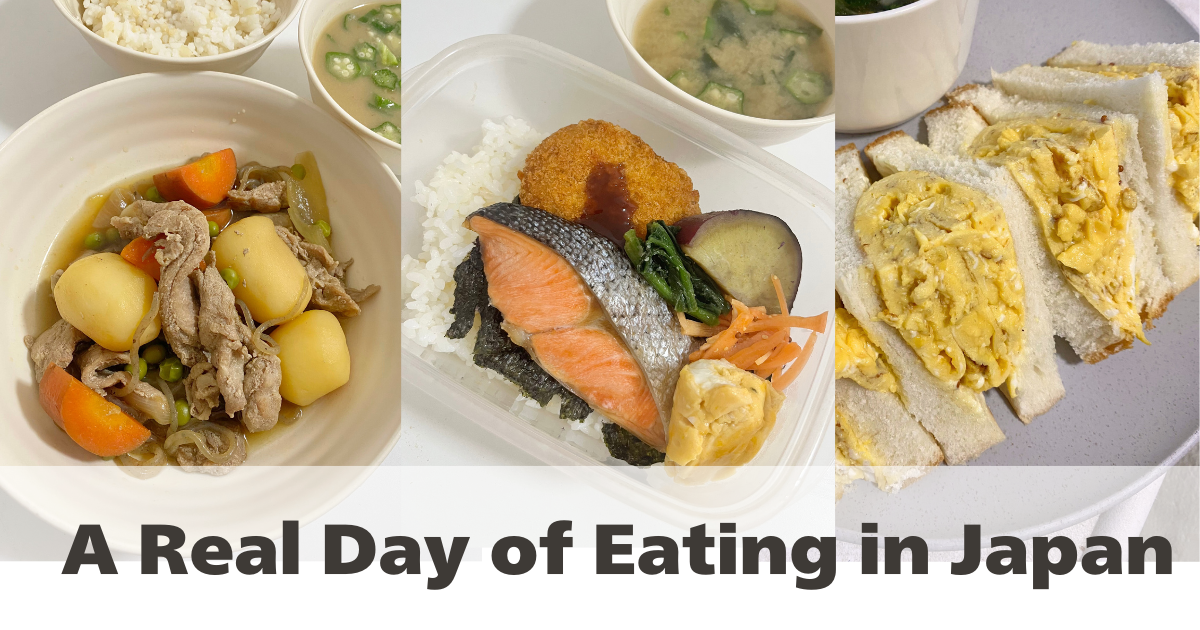
A Real Day of Eating in a Japanese Home

Hi, I’m Imomaru, born and raised in Japan.
Today I’m sharing what I actually ate in a typical Japanese day at home.
Nothing fancy — just real, everyday meals.
Breakfast
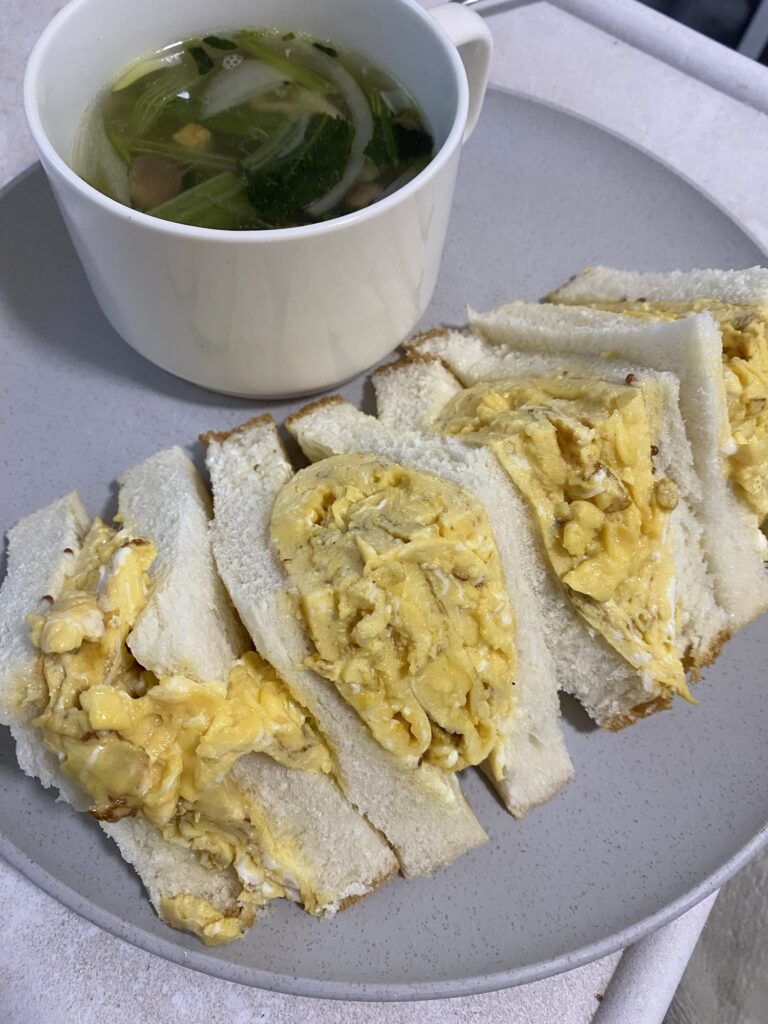
・Japanese rolled omelet sandwich
・Consommé soup
For breakfast, I had a sandwich filled with a thick Japanese rolled omelet.
In Japan, shokupan (Japanese milk bread) is often used for sandwiches.
It comes in different thicknesses, such as 6-slice or 8-slice cuts, depending on preference.
It may depend on the household, but many people in Japan seem to eat bread rather than rice for breakfast.
Eggs are high in protein and very filling, making this a simple yet balanced start to the day.
Lunch
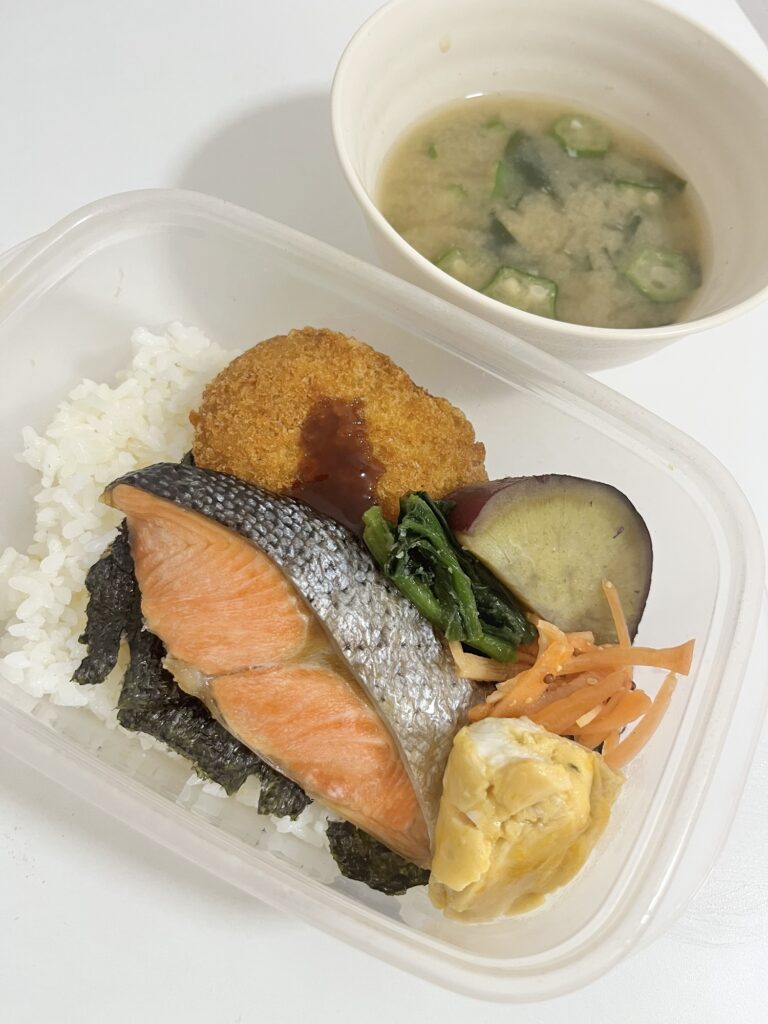
・Homemade “Nori Bento”
For lunch, I ate a bento.
A simple lunch box with rice topped with seaweed (nori), grilled salmon, and fried items is called nori bento.
It’s a very common and affordable menu item at Japanese bento shops.
Many people use leftovers from dinner to make the next day’s lunch, which makes it easier and quicker to prepare in the morning.
Dinner
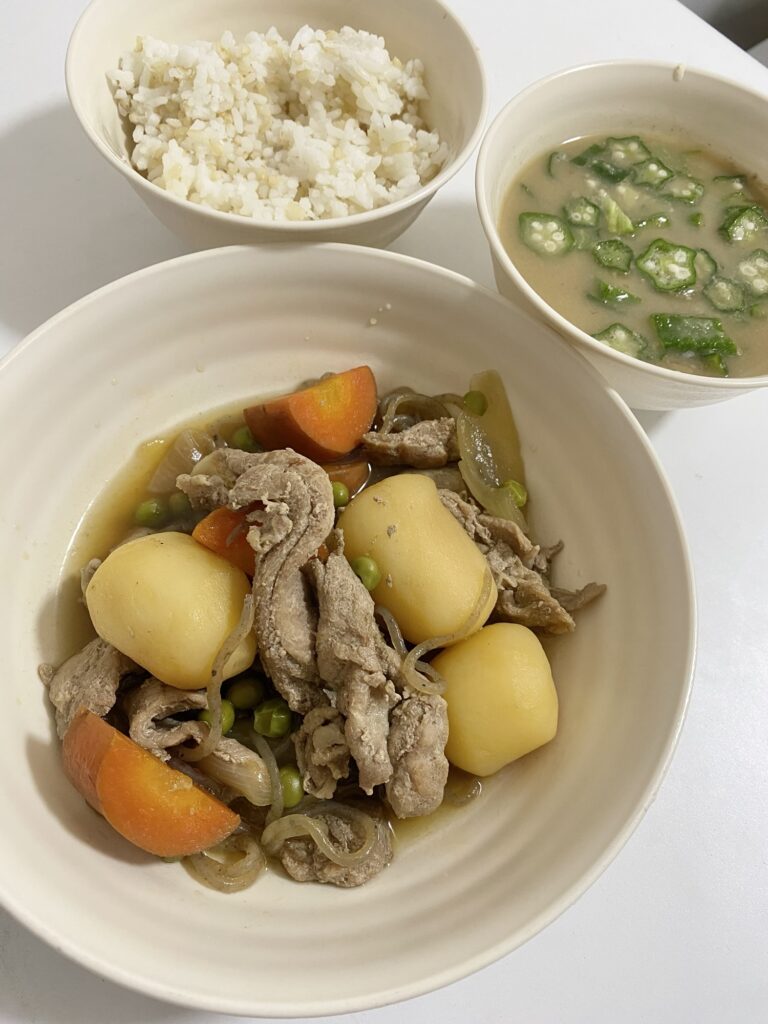
・Nikujaga
(simmered meat and potatoes)
・Rice
・Miso soup
Nikujaga is a classic Japanese home-cooked dish.
It’s made by simmering potatoes, carrots, onions, and meat in a slightly sweet soy-based sauce.
It’s comforting, simple, and commonly made in Japanese households.
In Japan, there’s even a playful idea that if someone can make good nikujaga, they might be good at cooking.
Snacks & Drinks
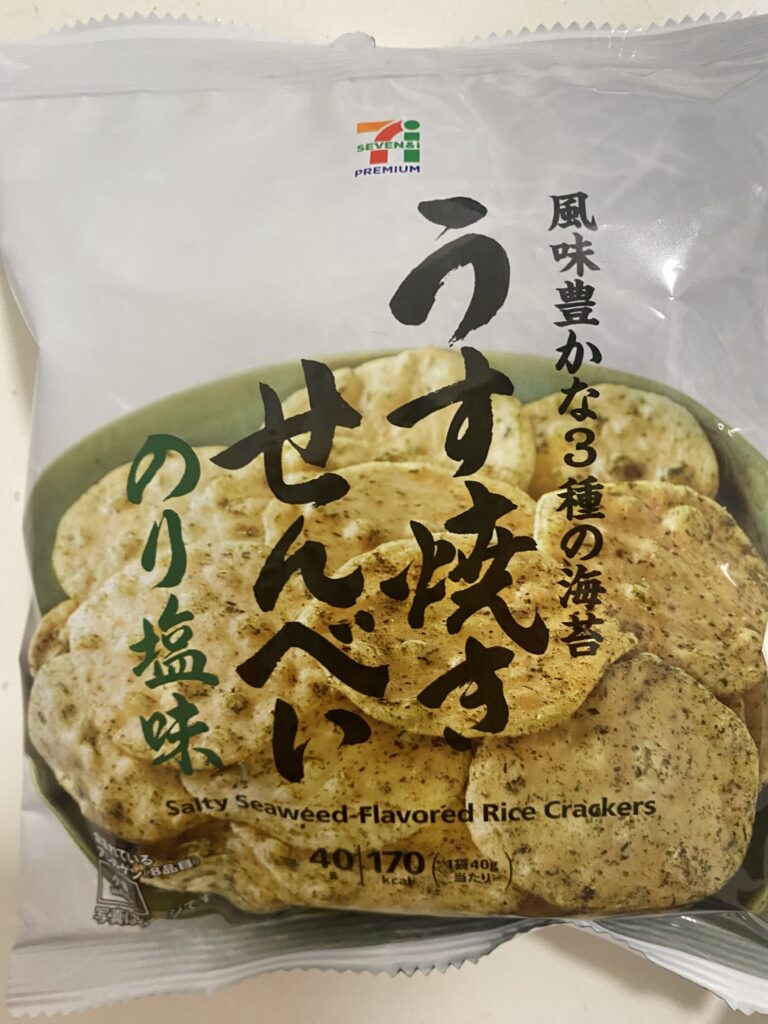
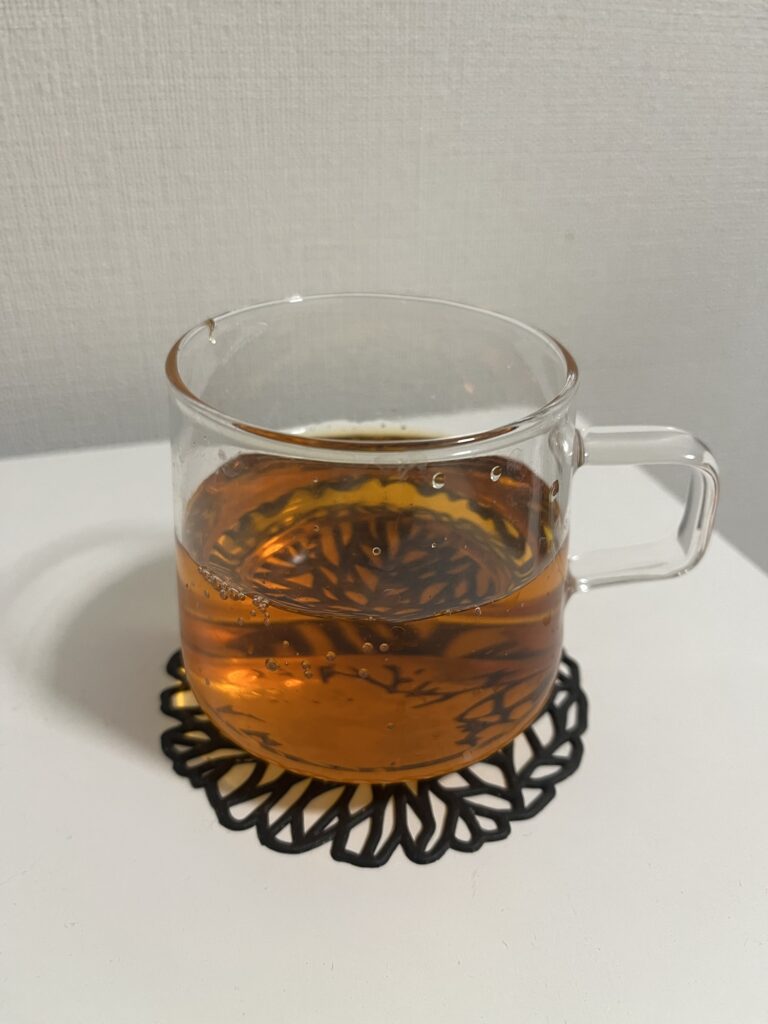
・Senbei (rice crackers)
・Rooibos tea
I love senbei and eat them almost every day.
They are crispy rice crackers that are usually baked rather than deep-fried, so they tend to contain less fat compared to potato chips.
On this day, I drank rooibos tea, but green tea and barley tea are more commonly enjoyed in Japan.
Can You Recreate This Outside Japan?
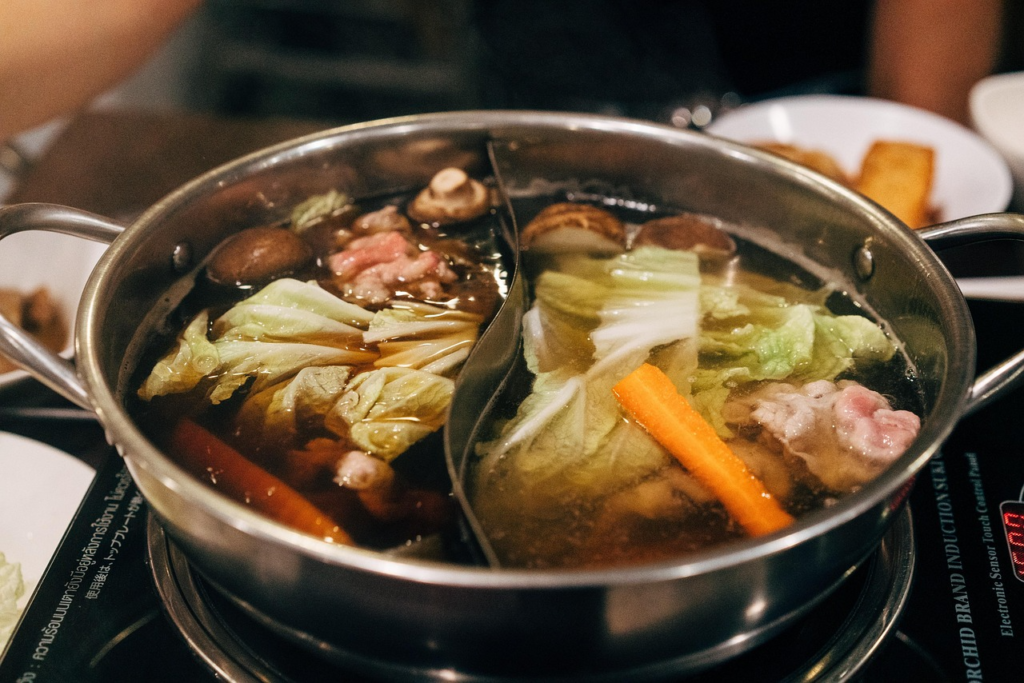
Yes, you can easily recreate this kind of meal outside Japan.
Most of the ingredients are simple and widely available.
You can use:
- Soft white bread instead of shokupan
- Soy sauce and sugar to make nikujaga
- Any seaweed sheets for nori bento
Japanese home meals are actually simple and flexible, which makes them easy to try anywhere.
This is what a very normal day of eating looks like in my home in Japan.
Nothing fancy.
Nothing extreme.
Just simple, balanced meals.
I believe the beauty of Japanese home cooking is not in being perfect —
but in being consistent.
If you’re curious about realistic Japanese meals and daily food culture,
I’ll continue sharing more of my everyday menus.
Thank you for reading 🤍

コメント